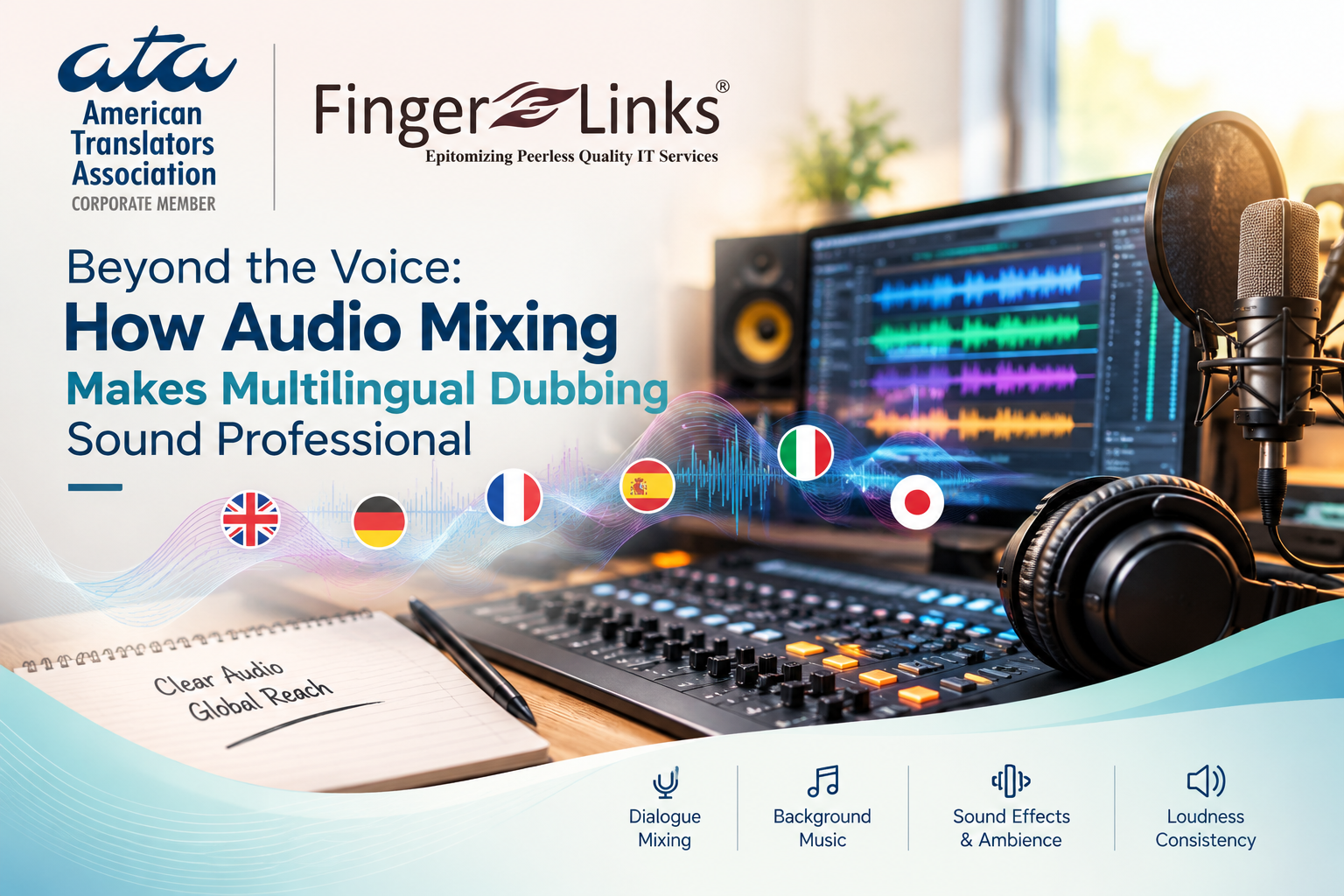
Beyond the Voice: How Audio Mixing Makes Multilingual Dubbing Sound Professional
- ⏰ October-16-2026 |
- ✍️ By Admin |
- 🏷️ In Dubbing
Introduction
Multilingual dubbing helps businesses, filmmakers, educational institutions, and digital content creators connect with audiences across different languages. However, recording accurate dialogue in another language is only one part of the production process. To make a dubbed video sound professional, every audio element must work together seamlessly.
Audio mixing plays a vital role in this process. It combines recorded dialogue, background music, sound effects, and ambient audio to create a clear, balanced, and engaging listening experience. Without proper mixing, even a well-translated and carefully recorded voice track can sound unnatural or disconnected from the video.
1. Maintaining Clear and Understandable Dialogue
Dialogue is the most important audio element in most dubbed videos. Viewers should be able to understand the spoken content without struggling to hear the voices over music or sound effects.
Professional audio mixing adjusts dialogue levels, reduces unwanted background noise, and applies appropriate equalization and compression where needed. These techniques help voices remain clear and consistent throughout the video.
For multilingual projects, each language recording may have different vocal characteristics and recording levels. Careful mixing helps maintain a consistent listening experience across all language versions.
2. Balancing Dialogue with Background Music
Background music creates emotion, supports storytelling, and sets the atmosphere of a scene. However, music that is too loud can overpower the dubbed dialogue, while music that is too quiet may weaken the overall impact.
Audio engineers balance music and dialogue so that both contribute effectively without competing for attention. Techniques such as volume automation and frequency adjustment can help dialogue remain intelligible while preserving the musical atmosphere.
The objective is not simply to reduce the music but to create a suitable balance that supports the message and mood of the video.
3. Preserving Sound Effects and Ambient Audio
Sound effects and ambient audio help viewers feel connected to what is happening on screen. Examples include footsteps, traffic, doors closing, crowd noise, and outdoor sounds.
During dubbing, these elements should be preserved wherever possible. If the original dialogue is mixed into the background soundtrack, the production team may need separate music and effects tracks or additional audio restoration.
Careful mixing ensures that the new dialogue fits naturally into the scene instead of sounding as though it was recorded separately from the original video.
4. Achieving Consistent Volume Across Languages
A video dubbed into several languages should provide a comparable listening experience in every version. However, different voice actors, recording environments, and languages can produce variations in loudness and vocal tone.
Audio engineers use loudness measurement, level adjustment, compression, and careful listening to keep audio levels consistent. The final mix should also meet the delivery platform's technical specifications.
Consistency is particularly important for businesses distributing training videos, promotional content, films, and online learning materials across international markets.
5. Avoiding Common Audio-Mixing Mistakes
Several issues can reduce the quality of a dubbed production. These include dialogue that is too loud or too quiet, noticeable background noise, abrupt volume changes, poorly synchronized sound effects, and music that masks important words.
Excessive noise reduction or compression can also make voices sound unnatural. To prevent these problems, audio teams should review the complete video, check transitions between scenes, use suitable monitoring equipment, and listen to the final version on different devices when practical.
6. A Final Audio Quality Checklist
Before delivering a multilingual dubbed video, production teams should verify that:
-
Dialogue is clear and easy to understand.
-
Background music supports rather than overwhelms speech.
-
Relevant sound effects and ambience are preserved.
-
Audio levels remain consistent throughout the video.
-
Dialogue timing matches the visuals.
-
No unwanted noise, clipping, or abrupt audio transitions are present.
-
The final file meets the client's format and loudness requirements.
Conclusion
Professional multilingual dubbing depends on more than accurate translation and voice recording. Audio mixing brings all the elements together, helping dubbed content sound natural, balanced, and appropriate for its intended audience.
At FingerLinks Infotech, careful attention to multilingual content production helps businesses communicate their messages across language barriers. By combining quality-focused dubbing workflows with effective audio review, content providers can deliver a more professional experience to viewers worldwide.