Audience-Specific Dubbing: How to Adapt Voice, Language, and Tone for Different Viewers
- ⏰ October-02-2026 |
- ✍️ By Admin |
- 🏷️ In Dubbing
Dubbing is no longer limited to translating spoken dialogue from one language into another. As videos reach audiences across countries, cultures, and age groups, simply translating the original dialogue may not be enough to create a natural viewing experience. The voice, vocabulary, tone, expressions, pacing, and emotional delivery may also need to be adapted to suit the intended audience.
This is where audience-specific dubbing becomes important.
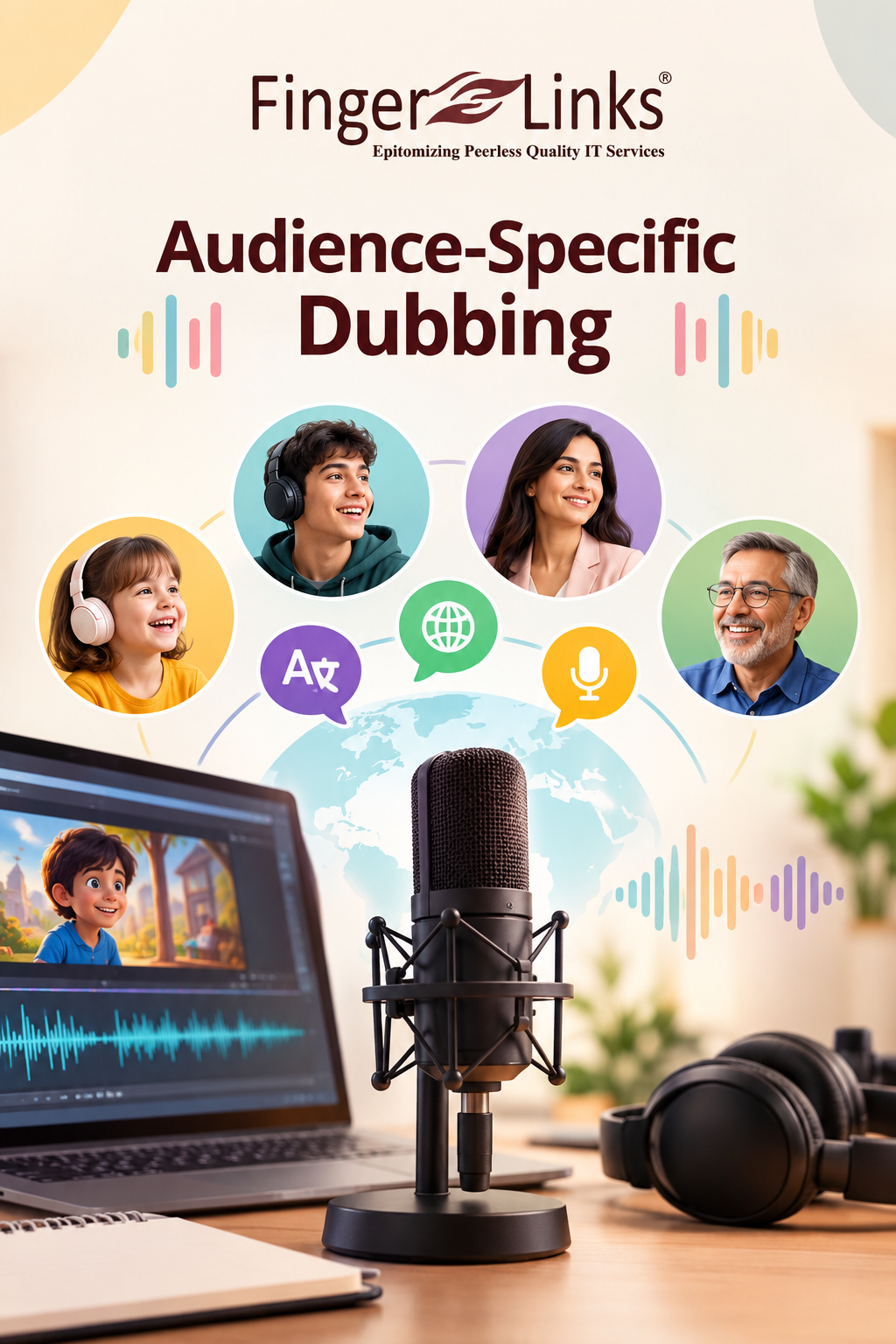
Audience-specific dubbing is the process of adapting dubbed content according to the characteristics and expectations of its target viewers. Instead of using the same dubbing approach for everyone, the content is tailored to factors such as age group, cultural background, language preferences, viewing habits, and the type of content.
For example, a children's animated series may require energetic voices, simple vocabulary, and expressive delivery. A corporate training video may require a professional and clear voice with terminology appropriate for its audience. Similarly, entertainment content may require natural expressions, humor adaptation, and emotional voice performances.
Why Audience-Specific Dubbing Matters
A technically accurate translation does not always produce an effective dubbed version. Direct translations can sometimes sound unnatural because languages differ in sentence structure, expressions, humor, and cultural references.
Audience-specific dubbing considers these differences during the localization process.
The objective is to make the dubbed dialogue sound as though it was originally created for the target audience while maintaining the meaning and intent of the source content.
Adapting Dubbing for Different Age Groups
Different age groups can respond differently to vocabulary, voice characteristics, pacing, and emotional expression.
Children's Content
Children's content often benefits from expressive voices, simple language, energetic delivery, and clearly communicated emotions. Dialogue may need to be adapted so that it remains easy to understand while retaining the personality of each character.
Teen-Focused Content
Content aimed at teenagers may require more contemporary vocabulary and conversational dialogue. Expressions that sound natural to younger viewers can help maintain the original personality of characters without making the dubbed dialogue feel overly formal.
Adult Audiences
Adult-oriented content may require more context-sensitive language and natural conversational delivery. Depending on the subject, the dubbing may also need industry-specific terminology or culturally appropriate expressions.
The Role of Culture in Audience-Specific Dubbing
Language and culture are closely connected. A phrase, joke, idiom, or reference that works well in one country may not have the same meaning for viewers elsewhere.
Dubbing localization can therefore involve adapting:
- Idioms and expressions
- Humor and wordplay
- Cultural references
- Names and terminology where appropriate
- Formal and informal language
- Emotional expressions
- Social and cultural context
The aim is not simply to replace words with their equivalent in another language. It is to preserve the intended meaning and viewing experience for the target audience.
Choosing the Right Voice
Voice selection is another important part of audience-specific dubbing.
The voice should complement the character, subject, and target viewers. Factors such as age, vocal personality, accent, pronunciation, tone, energy, and emotional range can influence how the audience perceives the content.
For example, an educational video may benefit from a calm and clear narration style, while an animated character may require a more expressive performance.
Adapting Tone and Delivery
The same sentence can communicate different feelings depending on how it is delivered.
Dubbing teams may consider:
- Speaking speed
- Pauses
- Emphasis
- Emotional intensity
- Character personality
- Formality
- Pronunciation
- Overall vocal energy
These elements help maintain the intended mood of the original content while making the dubbed version natural for its target viewers.
AI and Human Expertise in Audience-Specific Dubbing
AI-powered dubbing technologies can help speed up multilingual content production by supporting automated transcription, translation, voice generation, and synchronization.
However, audience-specific dubbing requires more than automated language conversion. Human review can help identify unnatural expressions, cultural issues, incorrect terminology, unsuitable tone, and dialogue that does not fit the intended audience.
A combination of AI-assisted production and human linguistic review can therefore help businesses produce localized content efficiently while maintaining quality and audience relevance.
Where Audience-Specific Dubbing Can Be Used
Audience-focused dubbing can benefit several types of content, including:
- Movies and web series
- OTT and streaming content
- Children's entertainment
- YouTube videos
- Short-form videos and microdramas
- Advertisements
- E-learning courses
- Corporate training
- Product demonstrations
- Gaming content
- Social media videos
Conclusion
Audience-specific dubbing goes beyond translating dialogue into another language. It considers who will watch the content and how the content should sound to them.
By adapting voice selection, vocabulary, cultural references, tone, pacing, and emotional delivery, content creators can produce dubbed videos that feel more natural and relevant to their intended viewers.
As businesses and media companies continue to reach multilingual audiences, audience-focused dubbing can become an important part of an effective content localization strategy.