Dubbing Short-Form Videos: How to Adapt Fast-Paced Content for Multiple Languages
- ⏰ October-08-2026 |
- ✍️ By Admin |
- 🏷️ In Dubbing
Introduction
Short-form videos have become an important format for digital communication, entertainment, advertising, and social media marketing. From Instagram Reels and YouTube Shorts to promotional videos and short episodic dramas, creators are producing content designed to communicate ideas quickly and hold viewers' attention.
As businesses and content producers reach audiences across different countries, making these videos available in multiple languages has become increasingly valuable. Dubbing helps viewers understand spoken content in their preferred language without relying entirely on subtitles.
However, dubbing short-form videos presents unique challenges. Dialogue moves quickly, scenes may change within seconds, and every line must fit into a limited duration. A translated sentence that works well in one language may be too long or too short when spoken in another. Voice delivery must also match the original speaker's emotions, character, and timing.
A successful multilingual dubbing workflow therefore requires more than direct translation. It involves adapting dialogue, coordinating audio with visuals, maintaining voice consistency, and reviewing the final video for quality.
1. Why Short-Form Video Dubbing Requires a Different Approach
Dubbing longer videos often provides more flexibility for dialogue adjustments and recording. Short-form videos, by contrast, must communicate their message within a tightly controlled runtime.
For example, a 20-second promotional video may contain a product introduction, a key benefit, and a call to action. If the translated dialogue takes several seconds longer than the original, the final message may feel rushed or require changes to the scene timing.
The same challenge appears in microdramas and short entertainment clips, where dialogue, facial expressions, and dramatic pauses contribute to the story.
Short-form dubbing must account for:
- Limited time available for each spoken line.
- Rapid dialogue and frequent scene transitions.
- Emotional delivery and character personality.
- Synchronization between speech and on-screen actions.
- Consistent audio quality across multiple videos.
- Clear communication of the original message.
Planning for these requirements from the beginning can reduce rework and help maintain a natural viewing experience.
2. Adapting Translated Dialogue to Fit the Video
Direct translation does not always produce dialogue that sounds natural when spoken aloud. Languages differ in sentence structure, word length, pronunciation, and conversational style. These differences become especially noticeable in short videos, where even a small timing mismatch can affect the scene.
Dialogue adaptation helps preserve the original meaning while making the translated speech suitable for the available time.
For example, an English promotional line such as “Get started today and experience the difference” may require a different sentence structure in another language. The objective is to communicate the same core message using words that sound natural and fit the video duration.
An effective dialogue adaptation process includes:
Preserving meaning: Retain the important information, intent, and tone of the original message.
Controlling dialogue length: Adjust sentence structure and wording to fit the time available without removing essential information.
Using natural expressions: Choose phrases that native speakers would use in the relevant context.
Reviewing spoken delivery: Check whether the adapted dialogue can be delivered comfortably at a natural pace.
Maintaining terminology: Keep product names, brand messages, and recurring expressions consistent throughout the content.
The result should sound like dialogue created for the target language rather than a word-for-word translation.
3. Maintaining Voice and Character Consistency
Short-form content is frequently published as a series. A brand may release several promotional clips, while a microdrama may contain dozens of short episodes. If the voices change noticeably between videos, the audience may experience a break in continuity.
Voice consistency is particularly important for recurring characters, presenters, narrators, and branded content.
A structured voice management process can help maintain consistency by recording:
- Voice characteristics and preferred speaking styles.
- Pronunciation of character names and specialized terms.
- Emotional tone and delivery preferences.
- Language and accent requirements.
- Voice assignments for recurring characters.
- Approved voice references for future episodes.
AI voice generation can support consistent delivery when the same approved voice configuration is used across multiple clips. Human review remains important for identifying differences in pronunciation, emotional expression, and conversational naturalness.
For series-based content, establishing voice guidelines before production can make subsequent episodes easier to manage and review.
4. Synchronizing Dubbing with Fast Scene Transitions
Short videos often contain quick cuts, close-up shots, rapid movements, and brief dialogue exchanges. The dubbed audio must fit the visual sequence without sounding disconnected from the action.
Synchronization involves more than matching the overall video duration. Individual lines, pauses, reactions, and scene transitions should also be considered.
For example, if a character asks a question and another character responds immediately, the dubbed version should preserve the conversational rhythm. A long pause or delayed response may weaken the impact of the scene.
The following practices can improve synchronization:
Check individual dialogue segments: Review the beginning and ending of each spoken line against the corresponding scene.
Preserve meaningful pauses: Allow room for reactions, dramatic moments, and natural conversational breaks.
Match emotional timing: Ensure that excitement, surprise, urgency, or hesitation occurs at the appropriate moment.
Review scene transitions: Check that audio does not continue unintentionally into an unrelated shot or end too early.
Inspect the complete video: Watch the final version from beginning to end to identify timing problems that may not be obvious when reviewing individual segments.
For videos containing visible speakers, additional attention may be required to align speech with mouth movements. For narration or voiceover-based clips, timing and coordination with on-screen events remain important even when lip synchronization is unnecessary.
5. Using AI Dubbing with Human Review
AI dubbing can help content producers prepare multilingual versions of short videos more efficiently. Depending on the tools and workflow used, AI systems can support speech recognition, translation assistance, voice generation, subtitle creation, and audio alignment.
These capabilities can be useful when businesses need to localize large numbers of short videos or publish content regularly in several languages.
However, automated output may contain issues such as unnatural phrasing, incorrect pronunciation, inconsistent emotional delivery, or dialogue that does not fit the original scene.
A combined AI and human-review workflow can address these limitations.
A typical process includes:
- Source preparation: Review the original video and identify spoken dialogue, speakers, and timing requirements.
- Transcription: Convert the source speech into text and check it for accuracy.
- Translation and adaptation: Translate the dialogue and adjust it for natural speech and available timing.
- Voice generation or recording: Produce the target-language dialogue using suitable AI voices or professional voice talent.
- Audio synchronization: Align the new dialogue with the video and adjust timing where necessary.
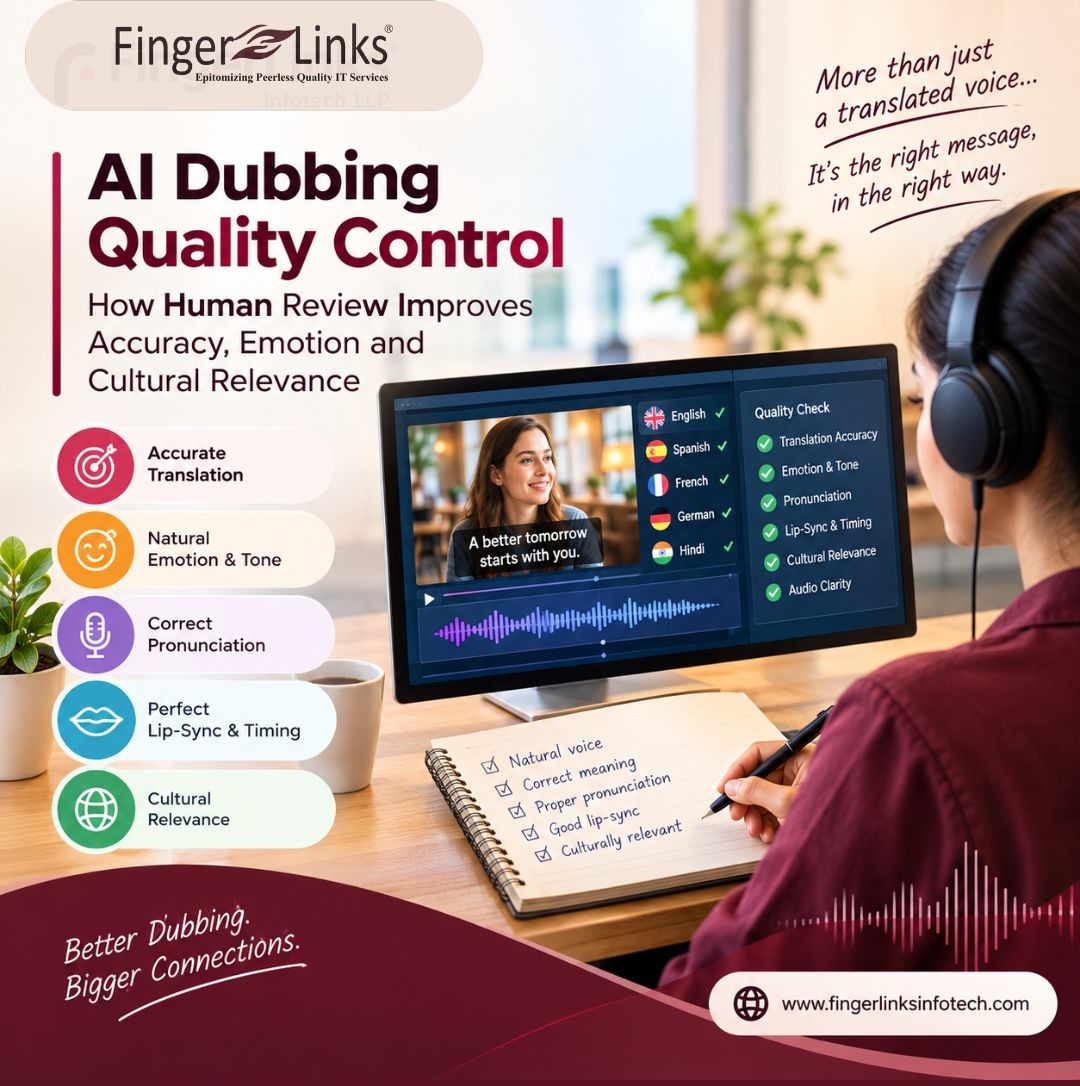
- Human review: Check pronunciation, grammar, tone, timing, and contextual accuracy.
- Final quality control: Review the complete video and correct any remaining issues before delivery.
The level of human involvement should depend on the content type, target audience, language requirements, and quality expectations. Entertainment content, sensitive communications, and brand-critical videos may need more detailed review than simple informational clips.
6. Adapting Content for Different Languages and Markets
A video that works well in one market may require adjustments before it feels natural to viewers elsewhere. Beyond translating words, localization considers expressions, cultural references, units of measurement, humor, and other context-specific details.
For example, a promotional clip may include a joke, idiom, or slogan that does not have a direct equivalent in the target language. A literal translation could confuse viewers or reduce the intended impact.
Effective localization should consider:
- Regional language preferences and relevant dialects.
- Cultural references and expressions.
- Correct pronunciation of names and locations.
- Brand terminology and product descriptions.
- Appropriate tone for the intended audience.
- Local conventions relevant to the message.
Not every video requires extensive cultural adaptation. The goal is to identify elements that could affect understanding, tone, or audience reception and adjust them appropriately while preserving the creator's original intent.
7. Managing Quality Across Large Volumes of Short Videos
Producing one multilingual clip may be straightforward, but managing dozens or hundreds of clips requires a repeatable process. This is especially relevant for social media campaigns, episodic entertainment, e-learning materials, and businesses publishing frequent promotional updates.
Without standardized procedures, teams may encounter inconsistent terminology, changing voice styles, missed dialogue, or differences in audio quality.
A quality management workflow should include:
Standardized project templates: Use consistent naming conventions, file formats, language labels, and delivery specifications.
Terminology management: Maintain approved translations for brand names, product features, and frequently used expressions.
Voice references: Keep documented voice selections and delivery guidelines for recurring speakers.
Review checklists: Check dialogue accuracy, timing, pronunciation, sound quality, and synchronization before approval.
Version control: Track revisions and ensure that the final approved audio is paired with the correct video version.
Delivery verification: Confirm that all requested language versions have been reviewed and exported in the required formats.
These measures can reduce avoidable corrections and support more predictable production as content volumes increase.
8. A Practical Checklist Before Publishing a Dubbed Video
Before publishing a short-form video in another language, review the following points:
- Does the translated dialogue preserve the original meaning?
- Does the spoken language sound natural to the intended audience?
- Are pronunciation and terminology correct?
- Does the dialogue fit the available time without sounding rushed?
- Are voices consistent across related clips?
- Does the audio align with the visual sequence?
- Are emotional expressions and pauses appropriate?
- Is the volume balanced, with clear speech and no distracting audio issues?
- Have subtitles, captions, or on-screen text been checked where applicable?
- Has the complete video been reviewed in the target language?
- Are the final files correctly labeled and ready for delivery?
A structured checklist helps teams identify common problems before publication and maintain consistent quality across multiple language versions.
9. The Future of Multilingual Short-Form Video Dubbing
As short-form video continues to support digital marketing, entertainment, education, and corporate communication, demand for multilingual content is likely to remain an important consideration for producers serving international audiences.
AI-powered tools are making several parts of the dubbing process more accessible. Improvements in speech recognition, voice generation, translation assistance, and synchronization can help production teams manage repetitive tasks and coordinate multilingual projects.
At the same time, natural dialogue, cultural understanding, voice performance, and final quality control remain essential. Technology can support the workflow, but each language version must still communicate the intended message clearly and appropriately.
Content producers that combine suitable technology with well-defined review procedures can build more consistent processes for adapting short-form videos to different languages and markets.
Conclusion
Dubbing short-form videos requires a careful balance between speed, timing, natural speech, and content accuracy. Whether the material is a social media reel, a promotional clip, or a microdrama, the translated dialogue must fit the scene while preserving the original message and emotional impact.
A reliable process combines dialogue adaptation, voice consistency, synchronization, localization, and final quality checks. AI dubbing can assist with production at scale, while human review helps identify errors and improve naturalness.
At FingerLinks Infotech, multilingual media services can support businesses and content producers looking to make their content accessible to audiences across language boundaries. By giving attention to both linguistic accuracy and audio quality, organizations can prepare dubbed videos that communicate effectively across different markets.
Contact FingerLinks Infotech to discuss your multilingual dubbing and localization requirements.