Dubbing Interactive Videos: How to Localize Branching Dialogue and Multiple Story Outcomes
- ⏰ October-21-2026 |
- ✍️ By Admin |
- 🏷️ In Dubbing
Interactive videos are changing the way audiences experience digital content. Unlike traditional videos that follow a fixed storyline, interactive videos allow viewers to make choices that influence dialogue, character actions, and the ending. From interactive training modules and educational content to branded storytelling and entertainment, this format creates more personalized viewing experiences.
However, bringing interactive videos to international audiences requires more than translating scripts. Each language version must accommodate different dialogue paths, character responses, and possible story outcomes. Interactive video dubbing helps make these experiences accessible to viewers across languages while preserving the original intent, emotional impact, and continuity of the story.
Understanding Branching Dialogue in Interactive Videos
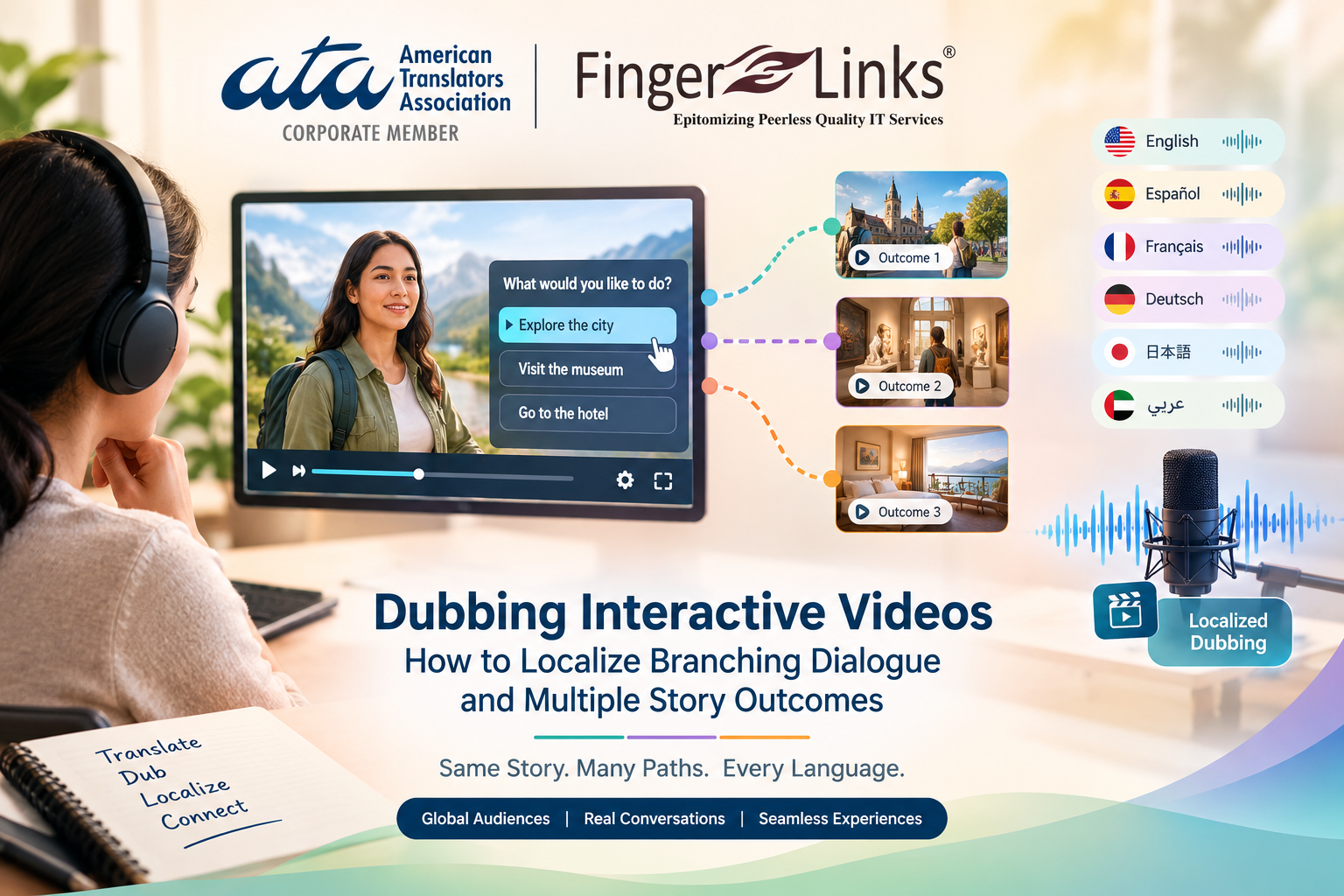
Branching dialogue occurs when a viewer's choice determines what a character says or what happens next. A single decision may lead to several possible responses, each creating a different direction for the story.
For example, an interactive product demonstration may allow viewers to choose between learning about product features, pricing, or technical support. Each selection triggers a different sequence of dialogue and narration.
When localizing this content, every dialogue branch must be considered. A translated response may be longer or shorter than the original, affecting timing, synchronization, and the transition between scenes.
A structured localization process ensures that every available choice leads to a coherent and natural-sounding experience in the target language.
Key Challenges in Localizing Interactive Video Dubbing
1. Managing Multiple Dialogue Paths
Interactive videos can contain dozens or even hundreds of dialogue combinations. Every branch may require separate voice recordings, translations, and quality checks.
Localization teams must identify all dialogue paths, maintain consistent terminology, and ensure that no response is overlooked. A dialogue map helps track the relationship between viewer choices, spoken lines, and subsequent scenes.
2. Preserving Character Identity and Emotion
Characters must sound consistent regardless of the path a viewer selects. Their personality, emotional tone, speaking style, and relationships with other characters should remain recognizable throughout the experience.
Professional dubbing involves selecting suitable voices, maintaining consistent pronunciation, and adapting performances to match the character's intent in each situation.
3. Adapting Dialogue Length and Timing
Languages differ in sentence structure, word length, and natural speaking rhythm. A translated line may take longer to deliver than its original version, creating timing issues within a fixed scene.
Voice artists and localization specialists must adapt phrasing without losing essential meaning. Where necessary, scripts and recording schedules should account for different dialogue durations and transitions.
4. Maintaining Continuity Across Story Outcomes
A viewer may choose one option early in the video and encounter a completely different ending from someone who chooses another option. Despite these differences, every possible outcome must feel complete and consistent.
This requires careful tracking of character names, references to previous choices, terminology, and contextual information. Each branch should be reviewed individually as well as in relation to the wider story.
Best Practices for Localizing Branching Dialogue
Create a complete dialogue map: Document every decision point, dialogue segment, transition, and possible ending before recording begins. This helps localization teams identify dependencies and avoid missing content.
Use context-rich translation files: Provide translators with character profiles, scene descriptions, preceding dialogue, and the choices that trigger each response. Context helps prevent inaccurate translations and unnatural dialogue.
Maintain voice consistency: Establish voice guidelines for pronunciation, tone, pacing, and character delivery. Where practical, use the same voice artists across all branches involving the same character.
Record with flexibility in mind: Plan recording sessions around dialogue variations and timing requirements. Maintain clear file names and version control so that each localized recording matches the correct scene and branch.
Test every possible path: Review the localized video by following different combinations of viewer choices. Check dialogue accuracy, audio transitions, voice consistency, timing, and the relevance of each ending.
The Role of Technology in Interactive Video Localization
Technology can simplify the management of complex localization projects. Script management systems, digital audio tools, and structured asset libraries help teams organize recordings, track revisions, and associate audio files with individual dialogue branches.
Automation can support repetitive tasks such as file organization, metadata tracking, and identifying missing audio assets. However, human linguistic review and professional listening checks remain essential for evaluating natural delivery, cultural relevance, and emotional expression.
A combination of technology and expert review helps maintain quality while managing the growing volume of content required for multilingual interactive experiences.
Industries That Benefit from Interactive Video Dubbing
Interactive video localization can support several industries:
-
Education and e-learning: Localized simulations allow learners to make decisions and experience different learning outcomes in their preferred language.
-
Corporate training: Employees can participate in scenario-based training with realistic conversations and decision-making exercises.
-
Marketing and advertising: Brands can deliver interactive product stories and customer journeys to audiences in multiple markets.
-
Entertainment and gaming: Localized character dialogue makes interactive narratives more accessible to international audiences.
-
Customer support: Interactive videos can guide viewers through different questions, troubleshooting steps, and service options.
In each application, accurate dubbing helps ensure that language differences do not interrupt the viewer's experience.
How FingerLinks Infotech Supports Multilingual Content
FingerLinks Infotech provides language and media services, including transcription, translation, subtitling, and related multilingual content support. These services help businesses prepare digital content for audiences across different language markets.
For interactive video projects, a well-planned localization workflow can help maintain linguistic consistency, organize dialogue assets, and support quality review across multiple language versions. The specific workflow can be tailored to the project's language requirements, content volume, and delivery specifications.
Conclusion
Localizing interactive videos requires a thoughtful approach to branching dialogue, character performance, and multiple story outcomes. Every choice must lead to dialogue that sounds natural, preserves the intended meaning, and fits the viewer's experience.
By combining structured script preparation, professional dubbing, careful asset management, and thorough testing, businesses can create interactive video experiences that connect with audiences across languages and cultures.
Planning a multilingual interactive video project? Contact FingerLinks Infotech to discuss your translation, transcription, subtitling, and multilingual content requirements.