Beyond Timing: How Subtitle Reading Speed, Line Breaks, and Screen Placement Influence Viewer Experience
- ⏰ November-10-2026 |
- ✍️ By Admin |
- 🏷️ In Captioning
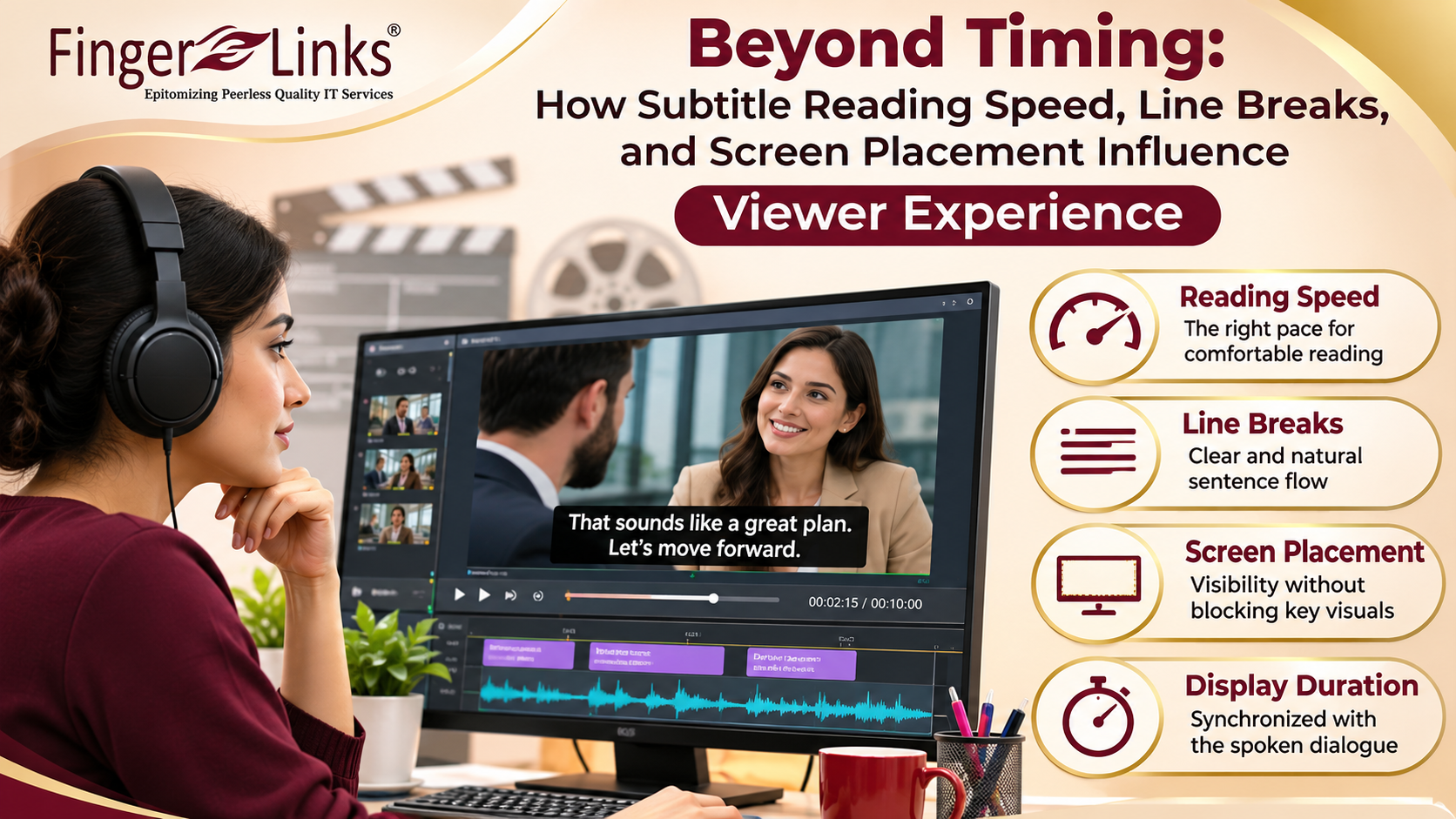
Subtitles play an important role in making video content understandable, accessible, and engaging for audiences across different languages and regions. While accurate translation and synchronization are essential parts of subtitling, the overall presentation of subtitles also determines how comfortably viewers can follow the content. Reading speed, line breaks, display duration, and screen placement are important factors that influence the viewing experience.
Poorly formatted subtitles can distract viewers, interrupt their concentration, and make it difficult to follow conversations. Even when the translation is accurate, inappropriate line breaks or excessive reading speed can reduce comprehension. Professional subtitling therefore requires careful attention to both linguistic accuracy and visual presentation.
1. Understanding Subtitle Reading Speed
Subtitle reading speed refers to how quickly viewers must read the text displayed on the screen before it disappears. It is commonly measured in characters per second (CPS), which indicates the number of characters viewers are expected to read within one second.
If subtitles appear too quickly, viewers may struggle to finish reading before the next caption appears. On the other hand, keeping subtitles on screen for too long can create unnecessary delays between dialogue and text.
An effective subtitle workflow considers the amount of text, the duration of the spoken dialogue, and the complexity of the language. Shorter sentences, appropriate reading speeds, and balanced display durations help audiences follow conversations without missing important visual details.
2. The Importance of Proper Subtitle Line Breaks
Line breaks influence how viewers process written information. Subtitles that divide sentences at inappropriate points can make reading uncomfortable and interrupt the natural flow of a conversation.
For example, separating an adjective from its noun or a preposition from the phrase it introduces can create unnecessary reading interruptions.
Professional subtitle formatting aims to maintain meaningful phrases together while distributing text evenly across available lines. Each subtitle should communicate a complete thought whenever possible without creating excessively long lines.
Well-planned line breaks are particularly important for documentaries, interviews, educational videos, and films containing complex dialogue. They help viewers understand sentences naturally while maintaining their attention on the video.
3. Subtitle Display Duration and Synchronization
Subtitle display duration determines how long text remains visible on the screen. The duration should correspond closely to the spoken dialogue while providing sufficient time for viewers to read the content.
Displaying subtitles before the dialogue begins or allowing them to remain after the speaker has finished can affect synchronization and create confusion.
Professional subtitling requires careful coordination between audio, dialogue, and subtitle timestamps. Editors review each subtitle segment to ensure that text appears at the appropriate moment and disappears without disrupting the next scene.
Consistent synchronization is especially important in fast-paced films, interviews, corporate presentations, and multilingual video productions.
4. Screen Placement and Visual Clarity
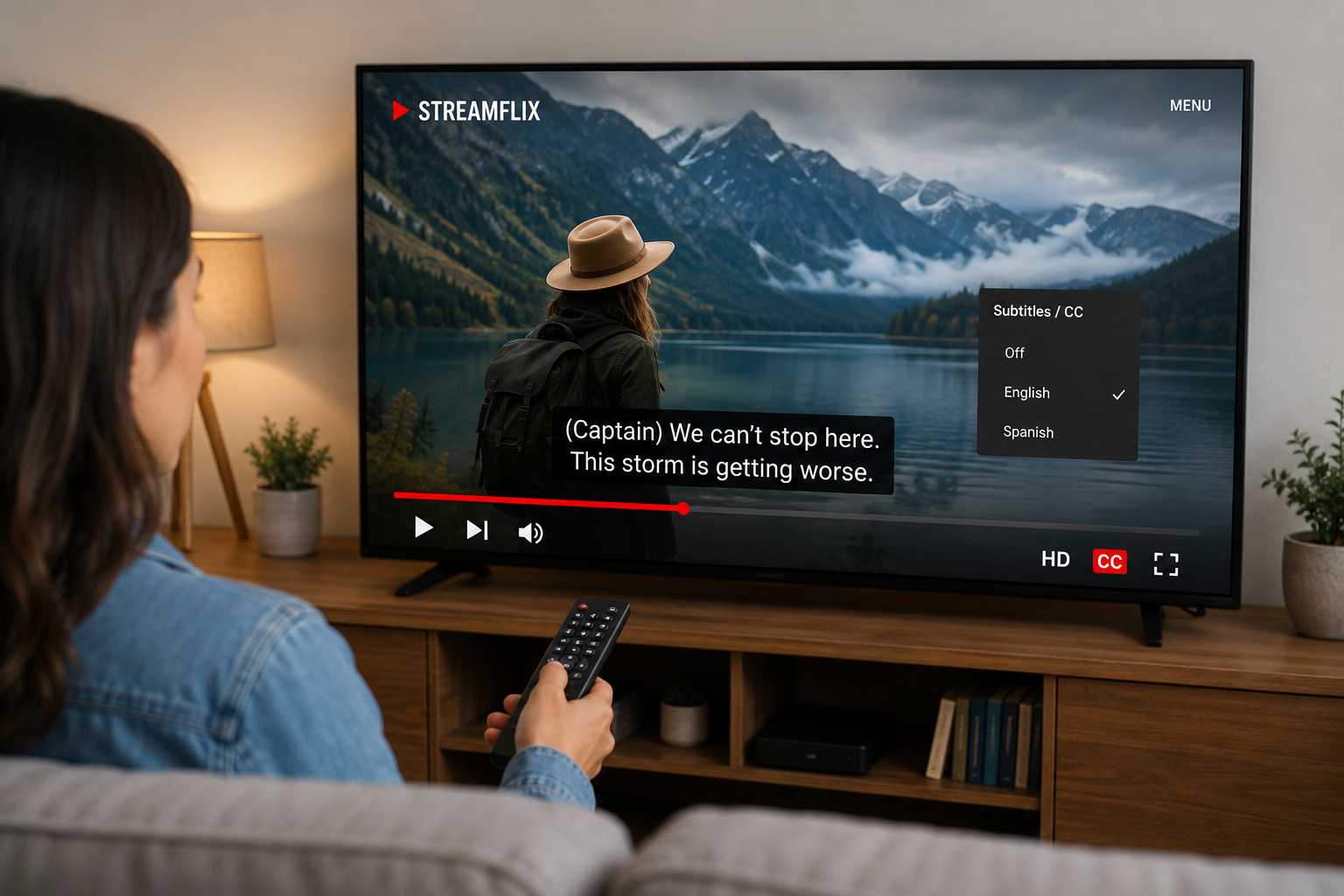
Subtitle positioning has a direct impact on how viewers interact with video content. Subtitles are commonly placed near the bottom of the screen, but their exact position may need adjustment depending on the visual composition.
For example, subtitles should not cover important information such as speaker names, product demonstrations, charts, facial expressions, or on-screen graphics.
In documentaries and interviews, poorly positioned subtitles may obscure the speaker's face or important visual details. Similarly, instructional videos may contain essential text or diagrams near the bottom of the screen.
Professional subtitle placement considers the video's composition, platform requirements, and viewing format. Safe positioning, consistent alignment, and appropriate margins help maintain visual clarity across different devices.
5. Challenges in Multilingual Subtitle Formatting
Multilingual subtitling introduces additional formatting challenges because translated sentences may be longer or shorter than the original dialogue.
A short English sentence may require considerably more characters when translated into another language. This can affect reading speed, line length, and display duration.
Different writing systems also have their own visual and formatting requirements. Languages using complex characters, right-to-left scripts, or different punctuation conventions require appropriate subtitle handling.
Professional localization teams must balance translation accuracy with readability. They may need to restructure sentences while preserving the original meaning and maintaining synchronization with the video.
6. Managing Subtitles During Scene Transitions
Rapid camera changes, overlapping conversations, background dialogue, and quick scene transitions can make subtitle synchronization more challenging.
Editors must ensure that subtitle changes do not occur at distracting moments or create confusion between speakers. Dialogue from multiple participants should be presented clearly, with appropriate speaker identification whenever necessary.
In interviews and panel discussions, consistent speaker labeling helps viewers distinguish between different voices. For films and documentaries, subtitle timing should also account for pauses, interruptions, and changes in dialogue.
Careful editing helps maintain continuity even when the video contains complex conversations or frequent scene changes.
7. Professional Subtitle Quality Control
Quality control is an essential stage of professional subtitling. A subtitle file should be reviewed for spelling, grammar, punctuation, synchronization, reading speed, line breaks, and screen placement before delivery.
Editors also verify whether the final subtitle format is compatible with the intended video platform or broadcasting system. Common formats include SRT, VTT, SCC, and STL, depending on project specifications.
A structured quality assurance process helps identify formatting inconsistencies, missing dialogue, incorrect timestamps, and readability issues.
How FingerLinks Supports Professional Subtitling?
At FingerLinks, we understand that professional subtitling involves much more than converting spoken dialogue into written text. It requires attention to linguistic accuracy, synchronization, readability, formatting, and quality assurance.
Our Closed Captioning and Subtitling Services support businesses, media organizations, content creators, and other professionals who require reliable video communication solutions.
From subtitle preparation and synchronization to multilingual formatting and quality checks, our focus is on delivering subtitles that complement the original video content and provide a clear viewing experience.
Conclusion
Subtitle quality is influenced by several interconnected factors. Reading speed, line breaks, display duration, and screen placement all contribute to how effectively viewers understand video content.
When these elements are handled correctly, subtitles become a natural part of the viewing experience rather than a distraction. Professional subtitling combines accurate language, thoughtful formatting, and precise synchronization to make video content accessible and comfortable to follow across different audiences and platforms.
FingerLinks – Delivering Professional Closed Captioning and Subtitling Solutions with Accuracy and Quality.