When Translation Meets Humor: The Challenges of Translating Sarcasm, Wordplay, and Humorous Expressions Across Languages
- ⏰ November-14-2026 |
- ✍️ By Admin |
- 🏷️ In Translation
Humor is one of the most powerful ways people communicate emotions, build relationships, and express ideas. A clever joke, sarcastic remark, witty advertisement, or playful expression can make content memorable and entertaining. However, when humorous content moves from one language to another, preserving its original impact becomes a significant challenge. What makes people laugh in one language may create confusion, sound unnatural, or lose its meaning entirely in another.
Unlike ordinary sentences, humorous expressions often depend on cultural knowledge, linguistic creativity, regional references, and the way words are interpreted. Translating them requires more than replacing words with their equivalents. It requires understanding the intention behind the expression and recreating the same effect for a different audience.
Professional translation therefore plays an important role in ensuring that humor remains meaningful, natural, and appropriate across languages.
1. Why Humor Is Difficult to Translate
Humor is closely connected to language, culture, and social experiences. A joke that works perfectly in English may not produce the same reaction when translated directly into Tamil, Hindi, French, Spanish, or another language.
Some jokes depend on similar-sounding words, while others rely on cultural traditions, local expressions, or unexpected combinations of meanings.
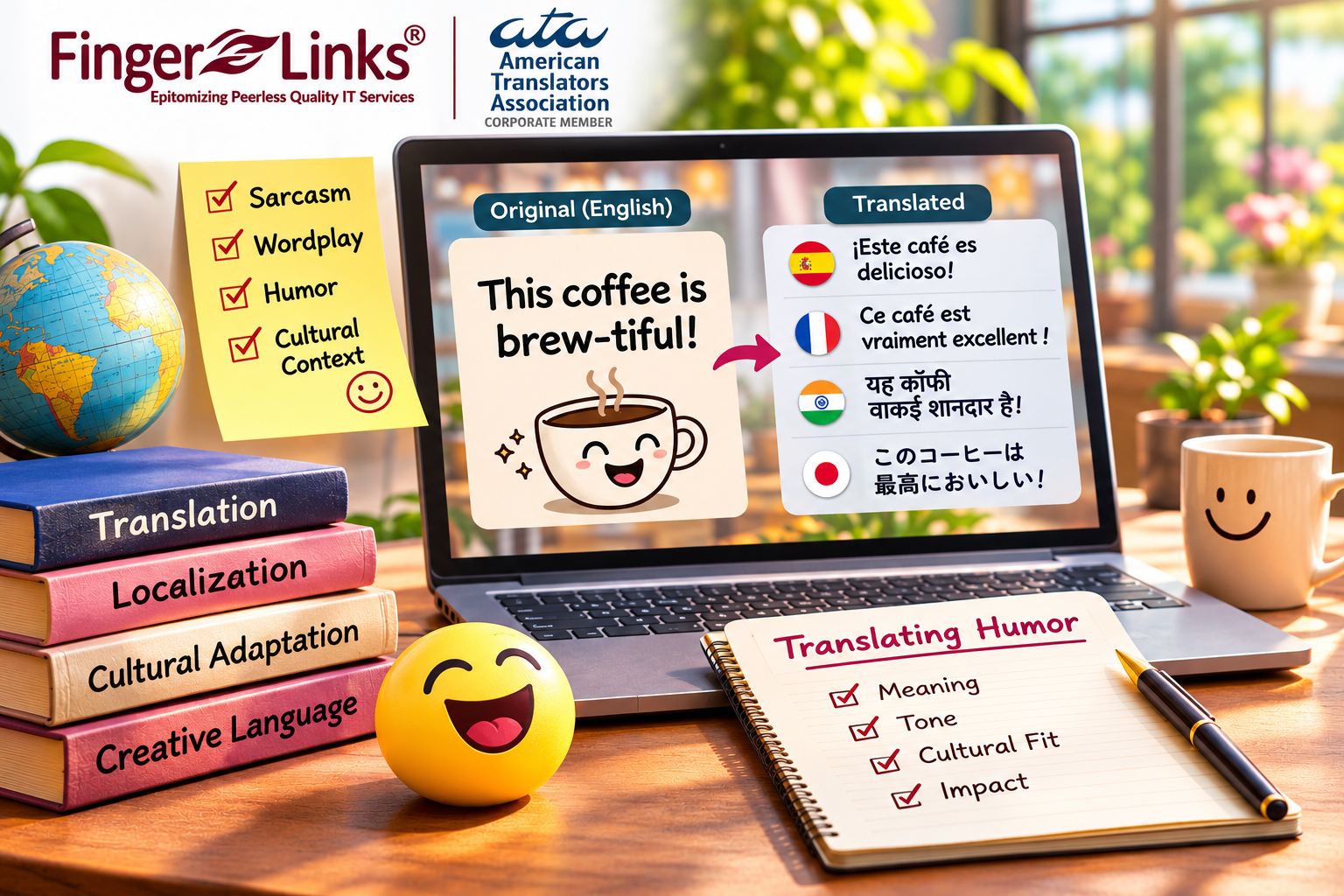
For example, an English joke built around the double meaning of a particular word may have no equivalent in the target language. A literal translation might communicate the sentence correctly but completely remove the humorous element.
Translators must identify what makes the original expression funny and find an alternative that delivers a comparable experience to the target audience.
2. Translating Sarcasm Without Losing Its Intention
Sarcasm involves expressing something through words that may communicate the opposite of the speaker's actual intention. It is frequently used in everyday conversations, entertainment, television programmes, films, and social media content.
For example, saying "What a wonderful day!" during heavy rainfall may communicate frustration rather than happiness.
When translated into another language, the sarcastic intention may not always be obvious. Some languages use different expressions, sentence structures, or conversational conventions to communicate irony.
A professional translator must consider:
-
The speaker's actual intention.
-
The relationship between the people communicating.
-
The cultural understanding of sarcastic expressions.
-
The emotional tone of the original statement.
-
Whether the translated version sounds natural to the target audience.
Preserving the intended tone is just as important as translating the words themselves.
3. The Complexity of Wordplay and Puns
Wordplay is one of the most challenging elements of humorous translation. Puns often depend on words that have multiple meanings, similar pronunciations, or unexpected linguistic combinations.
Consider an English expression that creates humor by using two meanings of the same word. When translated literally, the target language may not contain a similar word or sound combination.
In such situations, translators may need to create an entirely different expression that produces a similar humorous effect.
This approach requires creativity, vocabulary knowledge, and a strong understanding of both source and target languages.
The objective is not necessarily to preserve every original word but to retain the entertainment value and intended message.
4. Cultural References and Regional Humor
Humor frequently reflects the lifestyle, traditions, history, food, festivals, and social habits of a particular community.
A joke involving a regional festival, popular television personality, local sporting event, or traditional custom may be immediately understood by one audience but unfamiliar to another.
For example, a humorous reference to a local festival in India may require additional context or a culturally suitable alternative when translated for an international audience.
Translators must evaluate whether the original reference should be retained, explained, adapted, or replaced with a more familiar expression.
This process requires cultural awareness and careful decision-making. A successful translation should make the audience feel included rather than confused by unfamiliar references.
5. Maintaining Humor in Films, Advertisements, and Social Media
Different types of content create different translation challenges.
Films and Television: Dialogue often includes quick jokes, sarcastic conversations, character-specific humour, and expressions that must fit subtitle timing and dubbing requirements.
Advertisements: Brands frequently use creative slogans, witty phrases, and memorable wordplay to attract customers. Translations must preserve the advertising message while making it appealing in the target market.
Social Media: Memes, short videos, captions, and trending expressions frequently depend on current cultural references. Translators must understand the context to recreate the intended humour.
Books and Creative Writing: Authors may use subtle irony, humorous storytelling, and language-specific expressions. Translators must maintain the author's writing style while ensuring that the translated version feels natural.
Each format requires a different translation approach, depending on the audience, communication platform, and purpose of the content.
6. Common Mistakes in Humor Translation
Several mistakes can reduce the effectiveness of translated humorous content.
-
Literal translation: Converting every word without considering its humorous meaning.
-
Ignoring cultural differences: Using references that are unfamiliar to the target audience.
-
Changing the intended tone: Accidentally making a playful statement sound offensive or serious.
-
Losing wordplay: Removing the linguistic creativity that makes a joke entertaining.
-
Ignoring the audience: Failing to consider age groups, regional preferences, and communication styles.
-
Over-adaptation: Changing the original message so extensively that its actual intention disappears.
Avoiding these mistakes requires a combination of linguistic expertise, cultural understanding, and creative judgment.
7. The Role of Professional Translators in Creative Communication
Professional translators do much more than convert written content between languages. They interpret meaning, understand context, identify cultural differences, and select expressions that communicate effectively to the intended audience.
When translating humorous content, they evaluate the original message, identify its source of humor, research cultural references, and develop suitable alternatives.
Quality checks are equally important. Reviewing the translated content helps identify awkward expressions, unintended meanings, and cultural misunderstandings before publication.
For projects involving films, advertisements, videos, and digital media, coordination between translation, subtitling, and dubbing teams can further improve the final audience experience.
8. How FingerLinks Infotech Supports Multilingual Communication
At FingerLinks Infotech, we understand that effective translation involves more than linguistic accuracy. Every piece of content carries an intended message, tone, and purpose that must be communicated appropriately in the target language.
Our translation and localization services support businesses and content creators in communicating with audiences across different linguistic markets.
Whether the requirement involves business documents, creative content, multimedia projects, advertisements, or multilingual communication, maintaining clarity, consistency, and cultural relevance remains essential.
By combining language expertise with attention to context and audience expectations, FingerLinks Infotech aims to help clients communicate their messages effectively across languages.
Conclusion
Humor may be universal, but the way people understand and express it varies considerably across languages and cultures. Sarcasm, wordplay, puns, irony, and regional expressions require thoughtful adaptation to preserve their original impact.
A successful humorous translation does not simply reproduce the original sentence. It recreates the experience, intention, and entertainment value for a new audience.
As businesses and content creators increasingly communicate with international audiences, the demand for culturally appropriate creative translation continues to grow. With the right linguistic expertise and creative approach, even the most language-dependent humor can connect people across cultural boundaries.
FingerLinks Infotech – Connecting Languages, Preserving Meaning, and Bringing Ideas Closer.