Know Your Data: How Automation Improves Data Control and Governance
- ⏰ September-02-2026 |
- ✍️ By Admin |
- 🏷️ In Data Automation
Businesses collect and manage information from many sources, including customer databases, CRM platforms, ERP systems, spreadsheets, websites, applications, and internal business tools. As the volume of information grows, maintaining control over that data becomes increasingly important.
Businesses need to know what data they have, where it comes from, who can access it, how it is being used, and whether it is being managed consistently. This is where data governance plays an important role.
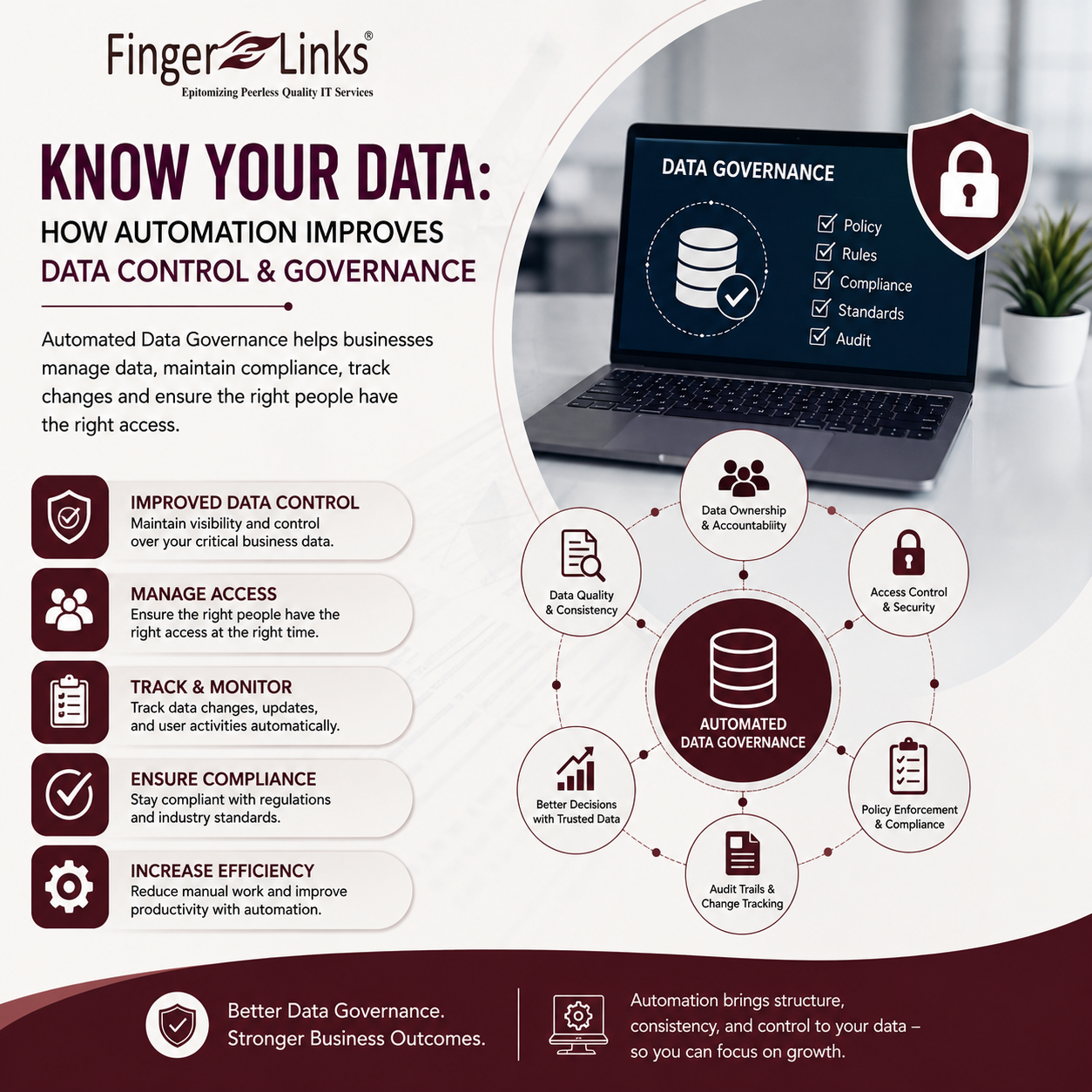
Automated data governance helps businesses apply policies, controls, and processes more consistently while reducing repetitive manual work.
What Is Data Governance?
Data governance refers to the processes and responsibilities used to manage data effectively across an organization. It helps establish clear standards for how information should be collected, stored, accessed, updated, and managed.
A strong data governance approach can help businesses answer important questions such as:
- Where did this data come from?
- Who is responsible for managing it?
- Who can access or update it?
- Is the information accurate and consistent?
- What happens when data is changed?
- Is the data being handled according to company policies?
How Automation Improves Data Control
Managing these processes manually can become difficult when businesses work with large volumes of data across multiple systems.
Automation can help apply predefined rules and processes consistently. For example, automated workflows can assist with:
- Classifying and organizing data
- Applying standardized data rules
- Tracking changes and updates
- Managing approval workflows
- Identifying inconsistent records
- Maintaining audit trails
- Monitoring data access
- Supporting compliance processes
Instead of depending entirely on manual checks, businesses can create structured processes that support better data control.
The Importance of Data Access Management
Not every employee needs access to every piece of business information. Automated access controls can help organizations manage permissions based on roles and responsibilities.
For example, specific teams may have access to customer information, while only authorized personnel can modify financial or sensitive business records.
This approach can improve accountability and reduce unnecessary access to important information.
Tracking Data Changes
Data often changes as it moves through business systems. Customer information may be updated, records may be corrected, and new data may be added.
Automated governance processes can help track these activities and create a clearer record of changes. This can make it easier for businesses to understand how information has been managed over time.
Supporting Better Data Quality
Data governance and data quality are closely connected. When businesses establish clear standards for data, it becomes easier to maintain consistency across different systems.
Automation can support these standards by identifying records that do not meet predefined requirements and routing exceptions for review.
This can help reduce problems caused by inconsistent formats, incomplete information, or uncontrolled changes.
Benefits for Businesses
Automated data governance can help businesses:
- Improve visibility over business data
- Maintain consistent data practices
- Reduce repetitive manual checks
- Improve accountability
- Support better data quality
- Track changes more effectively
- Manage data access
- Support compliance requirements
- Create more reliable data processes
Conclusion
Data is one of the most valuable resources within a modern business, but its value depends on how well it is managed.
As data continues to grow across multiple systems and departments, businesses need structured processes to maintain control and consistency.
Automation can make data governance more efficient by helping organizations apply rules, track changes, manage access, and maintain better visibility over their information.
Knowing your data means more than simply storing it. It means understanding where it comes from, how it is managed, and how it supports the business.
For FingerLinks Infotech LLP, this topic also fits naturally with its existing Data Automation content and service focus on customized data processing, reporting, integration, accuracy, and scalable workflows.
Because better data control leads to better data management—and better data management supports better business decisions.